
Education
Back to Blog
General4 min read
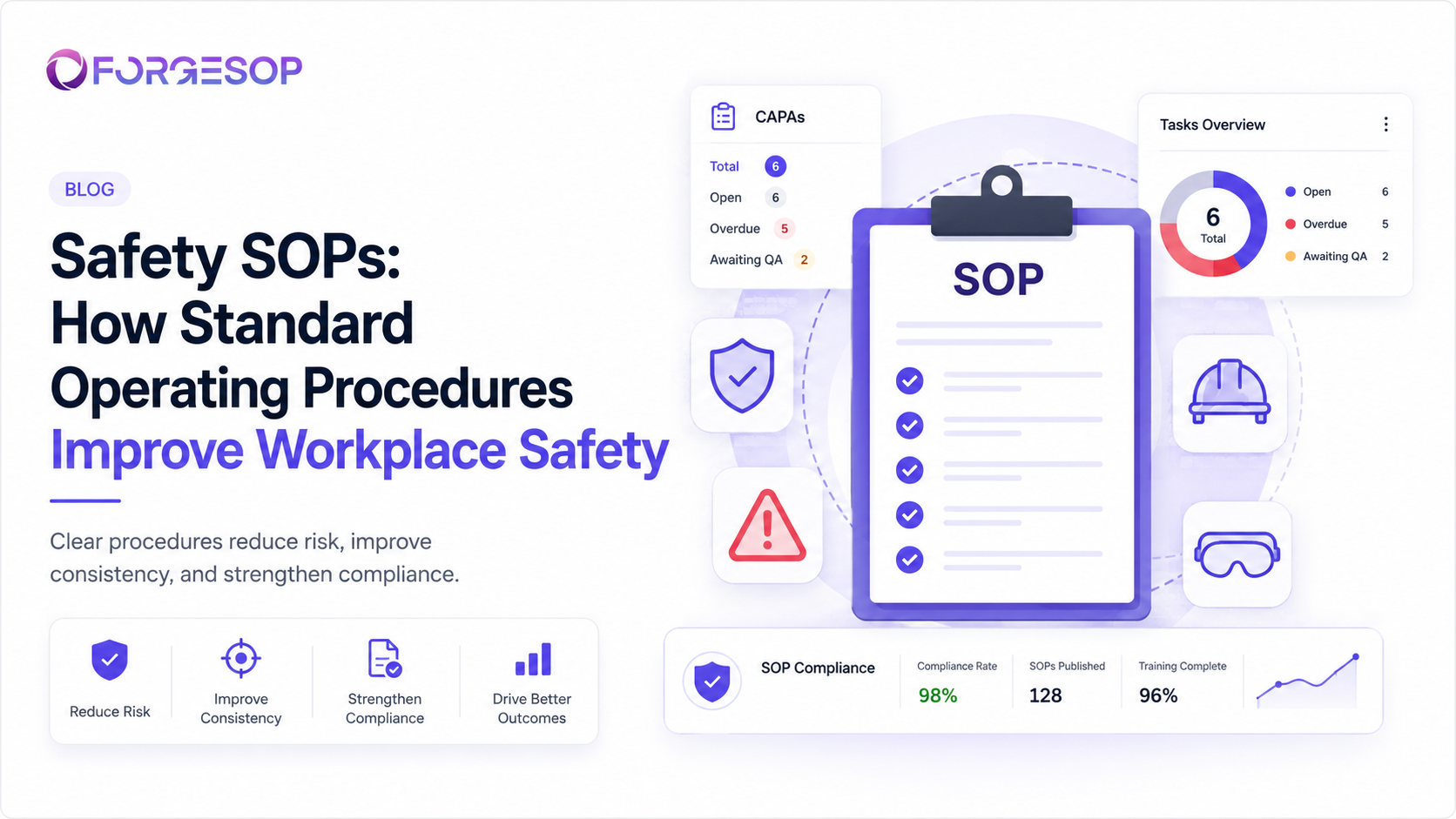
Safety SOPs: How Standard Operating Procedures Improve Workplace Safety
In every workplace, safety depends on more than PPE, inspections, or compliance audits. It depends on people knowing exactly what to do, when to do it, and how to do it correctly every single time. That is where Standard Operating Procedures (SOPs) become essential.
In high-risk industries such as manufacturing, chemical handling, construction, warehousing, healthcare, and energy, SOPs are one of the most important tools for preventing incidents, reducing confusion, and creating a consistent safety culture.
Key Takeaways
Safety SOPs help workers understand exactly how to perform tasks safely, consistently, and correctly.
Strong workplace safety SOPs reduce confusion, prevent incidents, and support compliance.
Traditional paper-based or PDF SOPs often fail because they become outdated, hard to access, or difficult to manage.
Effective SOPs should include hazards, controls, PPE requirements, emergency actions, roles, approvals, and version history.
Digital SOP management software helps safety and operations teams manage SOPs, track revisions, manage approvals, and stay audit-ready.
What Are SOPs in the Safety Industry?
A Standard Operating Procedure is a documented step-by-step instruction that explains how to perform a task safely and correctly. SOPs help workers follow approved methods while ensuring that hazards, controls, and emergency actions are clearly understood.
Examples of safety-related SOPs include:
Chemical handling and storage
Lockout/tagout procedures
Working at heights
Equipment startup and shutdown
Spill response
Emergency evacuation
PPE selection and use
Incident reporting procedures
These documents transform safety expectations into clear daily actions.
Why SOPs Matter More Than Ever
Modern workplaces are changing quickly. Companies are adopting new machinery, new chemicals, automation systems, and changing workforce structures. With these changes comes greater operational complexity.
Without clear SOPs, organizations often face:
Inconsistent work practices
Higher risk of injury or exposure
Increased training gaps
Regulatory non-compliance
Delays during emergencies
Greater dependence on tribal knowledge
Strong SOPs remove guesswork and standardize safe behavior across teams, shifts, and locations.
How SOPs Prevent Incidents
Many workplace incidents happen not because people intend to work unsafely, but because procedures are unclear, outdated, unavailable, or ignored.
A well-designed SOP reduces risk by:
1. Identifying Hazards Before Work Begins
Safety SOPs should outline hazards associated with the task, such as:
Chemical exposure
Electrical energy
Moving machinery
Slips, trips, and falls
Heat stress
Manual handling risks
This helps workers prepare before starting work.
2. Defining Control Measures
An SOP should explain required controls such as:
Isolation procedures
Ventilation requirements
PPE requirements
Permit systems
Safe operating limits
Required supervision levels
3. Standardizing Critical Tasks
When multiple employees perform the same task differently, risk increases. SOPs ensure consistency regardless of shift, location, or experience level.
4. Improving Emergency Response
When something goes wrong, people need fast and clear instructions. SOPs for spills, fires, leaks, injuries, or equipment failure can significantly reduce escalation.
Common Problems With Traditional SOPs
Many organizations technically “have SOPs,” but they are ineffective because they are:
Stored in folders no one checks
Written in overly technical language
Outdated after process changes
Too long and hard to follow
Missing approval controls
Not linked to training systems
Difficult to access on mobile devices
An SOP that is unreadable or inaccessible does not improve safety.
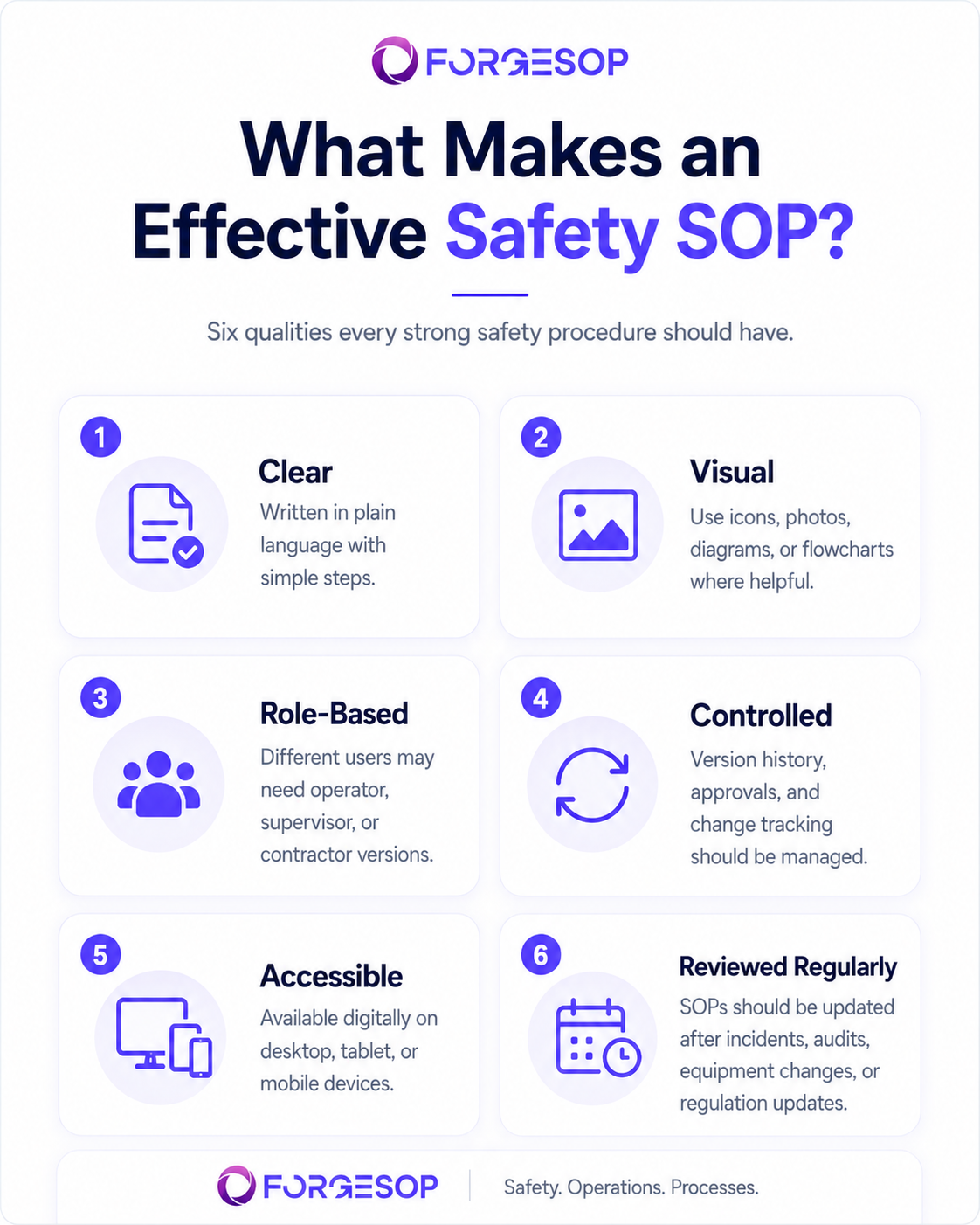
What Makes an Effective Safety SOP?
The best SOPs are:
Clear: Written in plain language with simple steps.
Visual: Use icons, photos, diagrams, or flowcharts where helpful.
Role-Based: Different users may need operator, supervisor, or contractor versions.
Controlled: Version history, approvals, and change tracking should be managed.
Accessible: Available digitally on desktop, tablet, or mobile devices.
Reviewed Regularly: SOPs should be updated after incidents, audits, equipment changes, or regulation updates.
The Shift Toward Digital SOP Management
Many organizations are moving away from static Word or PDF procedures toward digital SOP systems, such as ForgeSOP.
Benefits of digital SOP platforms include:
Centralized document control
Automated approvals
Version tracking
Role-based access control
Training acknowledgments
Searchable procedures
Real-time updates across locations
Audit readiness
For safety leaders, this means less administrative burden and stronger operational control.
SOPs and Safety Culture
Safety culture is built through repeated behaviors. SOPs help reinforce those behaviors by setting a clear standard for how work should be done.
When employees see that procedures are practical, updated, and supported by leadership, they are more likely to follow them. When procedures are outdated or ignored, trust declines quickly.
Strong SOPs signal that safety is operationally important, not just a compliance checkbox.
Final Thoughts
In the safety industry, SOPs are far more than documents. They are frontline risk control tools that protect workers, standardize operations, and strengthen compliance.
Organizations that treat SOP management strategically, rather than administratively. create safer, more efficient, and more resilient workplaces.
Frequently Asked Questions
What is a safety SOP?
A safety SOP is a Standard Operating Procedure that explains how to complete a task safely and correctly. It usually includes hazards, required controls, PPE, step-by-step instructions, emergency actions, and reporting requirements.
Why are SOPs important for workplace safety?
SOPs are important because they reduce confusion, standardize work practices, support training, improve compliance, and help prevent workplace incidents.
What are examples of workplace safety SOPs?
Examples include chemical handling SOPs, lockout/tagout procedures, spill response procedures, emergency evacuation procedures, equipment shutdown procedures, PPE procedures, and incident reporting procedures.
How often should safety SOPs be reviewed?
Safety SOPs should be reviewed regularly and whenever there is a process change, equipment change, incident, audit finding, regulatory update, or change in workplace risk.
What is digital SOP management?
Digital SOP management is the use of software to create, approve, update, store, distribute, and track SOPs. It helps teams manage version control, approval workflows, training acknowledgments, access control, and audit readiness.
How can SOP management software improve safety compliance?
SOP management software improves compliance by keeping procedures controlled, searchable, updated, approved, and linked to training or acknowledgment records. It also helps teams maintain audit-ready documentation.
General

Forge better processes
One platform. Always audit-ready.
Bring SOPs, checklists, audits, incidents, and CAPAs into one connected system for safer, clearer, and more consistent operations.
No credit card required · Built for teams that run on process